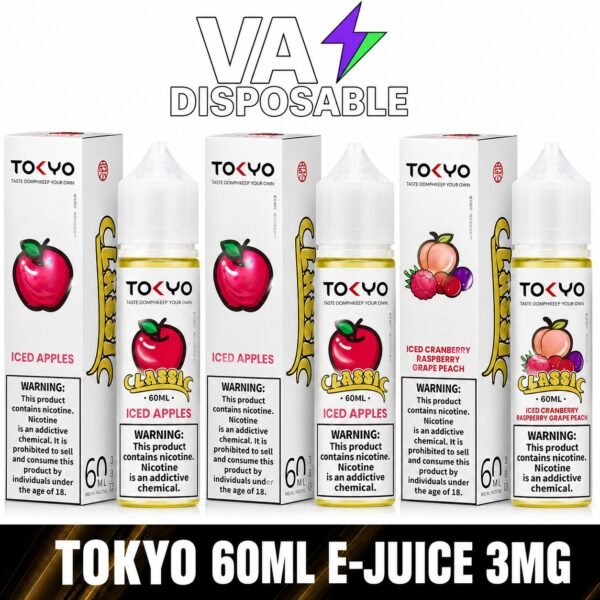
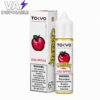
Tokyo E-liquid 60ML Classic Series 3MG is a bottled e-liquid product identified by three core specifications: the Tokyo Classic Series range, a 60 mL stated bottle volume, and a 3MG nicotine designation. Understanding these specifications is important when evaluating bottled vape liquid because bottle capacity and nicotine strength describe different technical properties. Tokyo E-liquid 60ML Classic Series 3MG should therefore be assessed through its formulation, nicotine concentration, PG/VG characteristics, flavor profile, packaging, storage requirements, and applicable regulatory considerations. This guide provides a technical overview intended to help readers understand the terminology associated with the product without relying on unsupported performance or health claims. Because formulations and labeling can vary by market and product batch, the manufacturer’s packaging should always be treated as the primary source for exact ingredients, nicotine concentration, and compliance information.
What Is Tokyo E-liquid 60ML Classic Series 3MG?
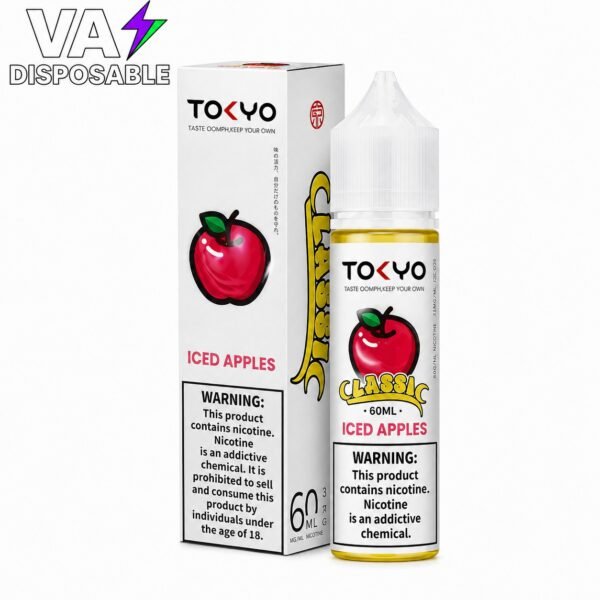
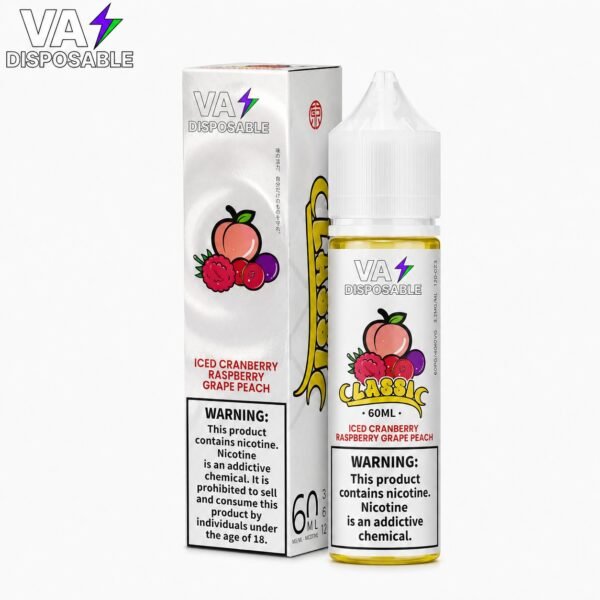
Tokyo E-liquid 60ML Classic Series 3MG is a bottled e-liquid product described by its nominal volume and nicotine strength.
The 60ML designation generally refers to the stated amount of e-liquid contained in the bottle. The 3MG designation commonly refers to a nicotine concentration of 3 mg/mL, although the exact labeling convention should be confirmed on the original product packaging.
Unlike a disposable vape, bottled e-liquid is designed to be used with a compatible refillable vaping device. The e-liquid is transferred into a device’s tank or pod system according to the device manufacturer’s instructions.
The product specification can therefore be separated into several components:
Brand or product line: Tokyo Classic Series
Bottle volume: 60 mL
Nicotine strength: 3 mg/mL when confirmed by labeling
Product type: Bottled e-liquid
Intended device: Compatible refillable vaping systems
Formulation: Typically based on a PG/VG carrier with flavoring and, where applicable, nicotine
Understanding the 3MG Nicotine Specification
The nicotine number is one of the most important technical details when evaluating Tokyo E-liquid 60ML Classic Series 3MG.
If the product is labeled 3 mg/mL, every milliliter of liquid contains a stated nicotine concentration of 3 milligrams.
For a 60 mL bottle, a simple concentration calculation would be:
3 mg/mL × 60 mL = 180 mg of nicotine in the nominal liquid volume
This is a calculation of the labeled concentration and bottle volume, not a measurement of how much nicotine an individual user will absorb.
Actual nicotine exposure can vary substantially depending on the device, power level, coil characteristics, inhalation behavior, and other factors.
Why Nicotine Strength Matters
Nicotine concentration affects how an e-liquid should be categorized and compared with other formulations.
For example:
Specification
Example Interpretation
0 mg/mL
No nicotine declared
3 mg/mL
3 mg nicotine per mL
6 mg/mL
6 mg nicotine per mL
12 mg/mL
12 mg nicotine per mL
18 mg/mL
18 mg nicotine per mL
A higher concentration does not necessarily correspond to a better product. It simply represents a different nicotine formulation.
Users should select and handle nicotine-containing products responsibly and according to applicable regulations and product instructions.
60ML Bottle Capacity Explained
The 60 mL specification describes liquid volume rather than device performance.
It does not mean that every user will obtain the same number of sessions, puffs, or days of use from the bottle.
Liquid consumption depends on several technical variables, including:
Coil resistance
Device power
Airflow
Coil surface area
Puff duration
Frequency of use
E-liquid viscosity
Device efficiency
For example, a high-power device can consume substantially more e-liquid than a lower-power pod system.
Therefore, comparing e-liquids purely by bottle volume can produce an incomplete technical assessment.
PG/VG Ratio and Its Importance
One of the most relevant formulation specifications for bottled e-liquid is the ratio of propylene glycol (PG) to vegetable glycerin (VG).
PG and VG are carrier liquids used in many e-liquid formulations, but they have different physical properties.
Propylene Glycol
PG is comparatively thin and is commonly associated with stronger flavor delivery and a more pronounced throat sensation.
Its lower viscosity can also make certain formulations more suitable for devices designed around thinner e-liquids.
Vegetable Glycerin
VG is considerably more viscous than PG. It is commonly associated with denser aerosol production and a smoother mouthfeel.
High-VG formulations may be better suited to hardware specifically designed to handle thicker liquids.
Why the Ratio Matters
The appropriate formulation depends partly on the device being used.
A simplified comparison looks like this:
Characteristic
Higher PG
Higher VG
Viscosity
Lower
Higher
Aerosol density
Generally lower
Generally higher
Flavor characteristics
Often pronounced
Often smoother
Throat sensation
Often more noticeable
Often softer
Hardware compatibility
Many lower-power systems
Devices designed for thicker liquids
The exact PG/VG ratio of Tokyo E-liquid 60ML Classic Series 3MG should be confirmed from the bottle or manufacturer’s documentation rather than inferred from the product name.
Flavor Characteristics of the Classic Series
Flavor is another major component of an e-liquid’s formulation.
A Classic Series product can include different flavor profiles depending on the specific variant. Product names and flavor descriptions should be treated as descriptions of sensory characteristics rather than chemical specifications.
A technical product listing should ideally identify:
Exact flavor name
Bottle size
Nicotine concentration
PG/VG ratio
Ingredient information where available
Manufacturer information
Batch or lot information
Relevant warnings
This provides substantially more useful information than simply describing a flavor as “strong” or “premium.”
Tokyo E-liquid 60ML Classic Series 3MG: Device Compatibility
The compatibility of Tokyo E-liquid 60ML Classic Series 3MG depends primarily on the device and formulation characteristics.
Before using bottled e-liquid, users should check the instructions for their specific pod, tank, or vape device.
Important Compatibility Factors
Coil Resistance
Coil resistance influences how much power the heating element requires.
Lower-resistance coils can operate at higher power and may consume liquid more rapidly.
Recommended Power Range
Manufacturers commonly specify an operating range for compatible coils.
Using a coil outside its recommended range can negatively affect performance and may damage the coil.
E-liquid Viscosity
A high-VG liquid can require a suitable wicking system because VG is more viscous.
Using a formulation that is unsuitable for a particular device can contribute to poor wicking or coil performance.
How to Read an E-liquid Label
When examining Tokyo E-liquid 60ML Classic Series 3MG, the label should be checked carefully.
A responsible product evaluation should look for:
Product name and variant.
Net liquid volume.
Nicotine concentration.
Ingredient information.
Manufacturer or responsible business information.
Batch or lot identification.
Appropriate warnings.
Production or expiry information where applicable.
Applicable compliance markings.
The packaging should remain intact and legible.
If the nicotine strength or ingredient information differs between the website listing and the physical bottle, the physical product labeling and current manufacturer documentation should be investigated before use.
Storage and Handling Best Practices
Nicotine-containing e-liquid requires appropriate handling and storage.
Recommended General Practices
Keep the bottle tightly closed when not in use.
Store it away from children and pets.
Avoid unnecessary exposure to heat and direct sunlight.
Keep the product in its original labeled container.
Avoid transferring it into unmarked containers.
Follow the manufacturer’s storage instructions.
Check the liquid and packaging before use.
E-liquid should not be treated like an ordinary beverage or household liquid.
Accidental ingestion or skin exposure to nicotine-containing liquid can present a poisoning risk, so appropriate precautions are important.
Authenticity and Product Verification
The authenticity of Tokyo E-liquid 60ML Classic Series 3MG is another consideration when evaluating a product.
Counterfeit or improperly labeled e-liquids can create uncertainty about nicotine concentration, ingredients, manufacturing quality, and traceability.
Practical Verification Checklist
Packaging: Look for consistent printing, labeling, seals, and product information.
Batch identification: Where available, check batch or lot information.
Nicotine declaration: Confirm the stated concentration directly from the packaging.
Bottle volume: Check that the labeled volume corresponds with the product listing.
Manufacturer information: Look for identifiable manufacturer or responsible-party information.
Security features: If the manufacturer provides an authentication system, use the appropriate verification method.
Regulatory information: For products marketed in regulated jurisdictions, verify the applicable compliance requirements.
Comparing 60ML 3MG E-liquid With Other Options
When comparing Tokyo E-liquid 60ML Classic Series 3MG with another bottled e-liquid, avoid focusing on brand names alone.
A useful technical comparison should consider:
Nicotine concentration
Bottle volume
PG/VG ratio
Flavor formulation
Intended hardware
Packaging quality
Ingredient labeling
Manufacturer information
Regulatory status
For example, a 30 mL bottle at 6 mg/mL and a 60 mL bottle at 3 mg/mL have different concentrations but can contain the same total nominal nicotine amount:
30 mL × 6 mg/mL = 180 mg
60 mL × 3 mg/mL = 180 mg
This demonstrates why both concentration and total liquid volume are important when interpreting product specifications.
Regulatory and Compliance Considerations
Regulations governing nicotine-containing e-liquids can differ significantly between jurisdictions.
Businesses should not assume that a product legally sold in one country is automatically authorized for sale in another.
For commercial websites, compliance review should consider:
Product registration requirements
Packaging and labeling requirements
Nicotine limits where applicable
Import requirements
Retail licensing
Age restrictions
Advertising restrictions
Online sales requirements
Product safety documentation
These requirements can change, so current government or regulatory sources should be consulted before importing, listing, selling, or advertising nicotine-containing products.
Common Mistakes When Publishing E-liquid Information
Using Unverified Specifications
Do not invent a PG/VG ratio, flavor list, bottle material, or coil recommendation if the manufacturer has not confirmed it.
Treating 3MG as a Performance Rating
3MG describes nicotine concentration; it does not indicate vapor production, flavor intensity, or product quality.
Making Health Claims
E-liquid product pages should avoid unsupported statements such as “safe,” “healthy,” or “risk-free.”
Confusing Volume With Usage
A 60 mL bottle does not provide a fixed number of puffs or days of use.
Ignoring Local Regulations
Product information and commercial availability are separate issues. Businesses should verify the regulations applicable to their market.
Best Practices for Technical SEO Content
For a high-quality page targeting Tokyo E-liquid 60ML Classic Series 3MG, factual precision should take priority over exaggerated marketing language.
A strong product-information page should:
Use the exact product name naturally.
Provide verified technical specifications.
Explain nicotine concentration clearly.
Distinguish stated specifications from estimates.
Include relevant safety information.
Avoid unsupported health claims.
Explain device compatibility carefully.
Keep regulatory information current.
Use concise headings and readable paragraphs.
Avoid keyword stuffing.
Semantic keywords that can support the main topic include 60ML e-liquid, 3MG nicotine e-liquid, bottled vape juice, PG/VG ratio, nicotine concentration, e-liquid formulation, refillable vape liquid, e-liquid specifications, nicotine-containing e-liquid, and vape liquid storage.
Frequently Asked Questions
What does 3MG mean in Tokyo e-liquid?
When expressed as 3 mg/mL, it indicates a stated nicotine concentration of 3 milligrams per milliliter of e-liquid. The product label should be checked to confirm the exact concentration.
How much liquid is in a 60ML bottle?
The stated bottle volume is 60 mL. Actual usable liquid can depend on packaging, handling, and the amount remaining when the product is considered finished.
Does 60ML determine how long the e-liquid will last?
No. Consumption varies according to device power, coil characteristics, airflow, puff duration, and frequency of use.
Is the 3MG formulation suitable for every vape device?
Device compatibility depends on the specific e-liquid formulation and the hardware manufacturer’s recommendations. The PG/VG ratio and device operating specifications should be checked before use.
How should nicotine-containing e-liquid be stored?
Keep it tightly sealed, away from children and pets, and protected from excessive heat and direct sunlight. Follow the manufacturer’s storage instructions.
Conclusion
Tokyo E-liquid 60ML Classic Series 3MG can be understood by separating its key specifications: a stated 60 mL liquid volume and a 3 mg/mL nicotine concentration when confirmed by the product label. Technical factors such as PG/VG ratio, coil resistance, operating power, airflow, and device compatibility can influence how the e-liquid behaves in a refillable vaping system.
For accurate product information, always verify the manufacturer’s labeling rather than assuming specifications from the product name alone. Authenticity, storage, nicotine handling, and applicable regulatory requirements should also form part of a responsible product evaluation.
CTA: If you are preparing technical content for this product, prioritize verified specifications, transparent labeling information, responsible safety language, and current regulatory requirements to create an accurate and compliance-conscious resource.



Reviews
There are no reviews yet.