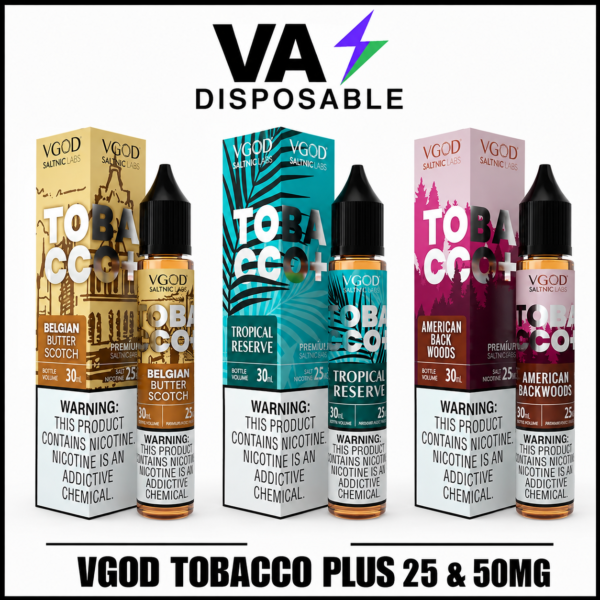
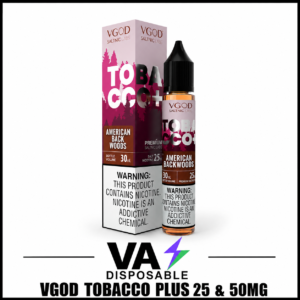
VGOD Tobacco Plus Salt Nicotine 25MG & 50MG is a nicotine-salt product specification that can be evaluated through several technical factors, including nicotine concentration, liquid volume, formulation, labeling, storage, and device compatibility. Understanding VGOD Tobacco Plus Salt Nicotine 25MG & 50MGrequires distinguishing between nicotine concentration and total liquid volume, because these measurements describe different characteristics of an e-liquid product.
The 25MG and 50MG designations generally refer to nicotine concentration expressed in milligrams per milliliter (mg/ml). A 50mg/ml formulation therefore contains approximately twice the stated nicotine concentration of a 25mg/ml formulation. This difference is technically significant and should not be treated simply as a flavor or packaging variation. Consumers researching nicotine products should also consider accurate labeling, manufacturer information, applicable regulations, device specifications, and the addictive nature of nicotine.
Understanding VGOD Tobacco Plus Salt Nicotine 25MG & 50MG
The VGOD Tobacco Plus Salt Nicotine 25MG & 50MG designation contains several pieces of information that should be interpreted separately.
First, the product name identifies the product line and formulation category. “Tobacco Plus” describes the specific product range or flavor designation, while “Salt Nicotine” identifies the nicotine formulation category.
The numbers 25MG and 50MG indicate nicotine concentration. In technical terms, the relevant measurement is generally milligrams of nicotine per milliliter of e-liquid.
This means:
25mg/ml: approximately 25mg of nicotine per milliliter.
50mg/ml: approximately 50mg of nicotine per milliliter.
50mg/ml: approximately twice the labeled concentration of 25mg/ml.
The actual nicotine exposure experienced by an individual cannot be calculated from concentration alone. Device characteristics, aerosol production, frequency of use, inhalation behavior, and the amount of liquid consumed can all affect nicotine exposure.
Nicotine Concentration vs. Bottle Volume
One of the most common sources of confusion is the difference between bottle volume and nicotine concentration.
A bottle marked 30ml, for example, contains 30ml of liquid. A separate label such as 25mg/ml indicates the concentration of nicotine within that liquid.
The theoretical nicotine quantity can be calculated as:
Total labeled nicotine = nicotine concentration × liquid volume
For example, a hypothetical 30ml bottle labeled 25mg/ml would contain a theoretical 750mg of nicotine based on the stated concentration. A 30ml bottle labeled 50mg/ml would contain 1,500mg.
These are concentration-based calculations and should not be interpreted as the quantity of nicotine absorbed by a person.
What Is Salt Nicotine?
Salt nicotine, commonly abbreviated as “nic salt,” refers to a nicotine formulation that differs chemically and sensorially from traditional freebase nicotine.
The formulation is associated with the use of nicotine salts rather than nicotine in its conventional freebase form. One reason this distinction matters is that formulation characteristics can influence the sensory experience of a nicotine-containing liquid.
However, a smoother sensory experience does not mean that the liquid contains less nicotine.
This distinction is particularly important when evaluating VGOD Tobacco Plus Salt Nicotine 25MG & 50MG. Nicotine concentration and perceived harshness are separate properties. A product may feel relatively smooth while still carrying a comparatively high nicotine concentration.
25MG vs. 50MG: Technical Comparison
Technical characteristic
25MG
50MG
Stated concentration
25mg/ml
50mg/ml
Relative concentration
1×
2×
Nicotine concentration difference
Baseline
Approximately double
Importance of accurate labeling
High
Very high
Device considerations
Important
Particularly important
Storage precautions
Required
Required
Nicotine dependence considerations
Applicable
Applicable
The key technical difference is concentration. The 50mg/ml specification represents approximately twice the nicotine concentration of 25mg/ml when both measurements use the same mg/ml basis.
VG and PG in Nicotine E-Liquid
Another technical factor in e-liquid analysis is the VG/PG ratio.
VG stands for vegetable glycerin, while PG stands for propylene glycol. Both are commonly used as carrier liquids in e-liquid formulations.
VG is generally associated with:
Greater vapor production
Higher liquid viscosity
Different wicking characteristics
PG is generally associated with:
Lower viscosity
Stronger flavor-carrying characteristics
A different throat sensation
The exact VG/PG ratio of a particular VGOD Tobacco Plus Salt Nicotine 25MG & 50MG product should be confirmed from the product packaging or reliable manufacturer documentation rather than assumed.
Formulation can affect how an e-liquid behaves in different devices, particularly because viscosity and coil design can influence liquid delivery.
Device Compatibility
Device compatibility is an important technical consideration when examining nicotine-salt products.
Different vaping systems operate under different electrical and mechanical conditions. Device power, coil resistance, airflow, and liquid delivery systems can influence aerosol generation and nicotine delivery.
Higher-concentration nicotine liquids are generally associated with lower-power systems rather than high-output configurations. However, consumers should not rely on general assumptions about compatibility.
Instead, relevant product and device documentation should be checked for:
Recommended device category.
Coil specifications.
Recommended operating range.
Liquid viscosity requirements.
Manufacturer warnings.
Nicotine concentration limits or labeling requirements.
Using a liquid outside the manufacturer’s stated specifications can produce unpredictable performance and may alter nicotine delivery.
Understanding the Tobacco Flavor Category
The “Tobacco Plus” designation identifies a tobacco-oriented flavor category. Tobacco-style e-liquids can be formulated to produce different sensory profiles, ranging from relatively straightforward tobacco notes to blends incorporating additional flavor components.
Flavor descriptions should not be confused with nicotine specifications.
For technical evaluation, it is useful to separate:
Flavor profile
Nicotine concentration
Liquid volume
VG/PG ratio
Ingredient information
Manufacturer details
Batch information
This approach makes it easier to compare products without treating flavor characteristics as evidence of nicotine strength or formulation quality.
Product Labeling and Authenticity
Accurate labeling is particularly important for nicotine-containing products.
When researching VGOD Tobacco Plus Salt Nicotine 25MG & 50MG, relevant packaging information may include:
Product name
Nicotine concentration
Bottle volume
Ingredient information
Manufacturer details
Batch or lot identification
Production or verification information
Applicable warnings
Child-resistant packaging information where required
A professional appearance does not, by itself, establish authenticity.
Where a manufacturer provides an authenticity-verification system, users should rely on the manufacturer’s official verification method rather than assuming that an online listing or product photograph proves authenticity.
Storage and Handling Considerations
Nicotine-containing liquids require careful handling and storage.
General precautions include:
Keep containers tightly closed.
Keep nicotine liquids away from children and pets.
Avoid unnecessary skin contact.
Do not ingest e-liquid.
Follow the storage instructions supplied with the product.
Avoid excessive heat and direct sunlight.
Do not use leaking or damaged containers.
Dispose of unwanted product according to applicable local requirements.
Nicotine can be harmful if improperly handled or accidentally ingested. If accidental exposure occurs, appropriate medical or poison-control assistance should be sought.
Nicotine and Dependence
Nicotine is an addictive substance. Consequently, nicotine concentration should be considered an important health and safety characteristic rather than merely a product specification.
The difference between 25mg/ml and 50mg/ml is substantial from a concentration perspective. A higher labeled concentration means that the same volume of liquid contains more nicotine.
Actual exposure can vary significantly depending on:
Device characteristics
Amount of liquid consumed
Puff duration
Frequency of use
Individual behavior
Nicotine tolerance
People who do not currently use nicotine should not begin using nicotine products.
Regulatory Considerations
Regulations concerning nicotine-containing products can differ by country and may change over time. Requirements may cover areas such as product standards, packaging, labeling, advertising, sale, importation, and minimum age.
Anyone researching VGOD Tobacco Plus Salt Nicotine 25MG & 50MG in a particular market should verify current requirements through relevant government or regulatory sources.
Information presented by retailers or third-party websites should not automatically be considered confirmation of legal compliance.
Common Technical Mistakes
Mistake 1: Confusing MG With ML
MG refers to mass, while ML refers to volume. A 25mg/ml specification describes the amount of nicotine per milliliter.
Mistake 2: Assuming 50MG Is Only Slightly Stronger
If both specifications are measured in mg/ml, 50mg/ml represents approximately twice the nicotine concentration of 25mg/ml.
A tobacco flavor description does not determine nicotine concentration. The concentration should be taken from the product label.
Mistake 4: Ignoring Device Specifications
Different devices can produce different quantities of aerosol and therefore can influence nicotine delivery.
Mistake 5: Treating Online Claims as Verification
Product photographs and retailer descriptions are not substitutes for manufacturer information and applicable regulatory documentation.
A Practical Evaluation Checklist
When reviewing a nicotine-salt product, consider the following:
Verify the nicotine concentration.
Confirm the liquid volume.
Check the ingredient and formulation information.
Review the manufacturer’s details.
Check batch or authenticity information where available.
Review device compatibility.
Follow storage and handling instructions.
Check applicable local regulations.
Consider the addictive nature of nicotine.
Avoid assuming that a higher concentration is appropriate for a particular individual.
Frequently Asked Questions
What does 25MG mean?
When expressed as 25mg/ml, it means the liquid contains approximately 25 milligrams of nicotine per milliliter.
What does 50MG mean?
When expressed as 50mg/ml, it indicates approximately 50 milligrams of nicotine per milliliter, making it approximately twice the concentration of 25mg/ml.
Is salt nicotine the same as freebase nicotine?
No. They are different nicotine formulations with different chemical and sensory characteristics.
Accurate labeling helps users understand nicotine concentration, ingredients, product specifications, and relevant warnings.
Conclusion
VGOD Tobacco Plus Salt Nicotine 25MG & 50MG can be understood more accurately by separating its product identity, nicotine formulation, concentration, liquid volume, and technical specifications. The most significant distinction between 25mg/ml and 50mg/ml is concentration: 50mg/ml represents approximately twice the nicotine concentration of 25mg/ml.
Device compatibility, VG/PG composition, authenticity, labeling, storage, local regulations, and nicotine dependence are also important considerations. Rather than relying solely on product names or retailer descriptions, technical evaluation should be based on verified labeling and reliable manufacturer information.
For responsible research, always review the current product documentation and applicable local regulations, and remember that nicotine is an addictive substance.
Nicotine
25MG, 50MG
Flavors
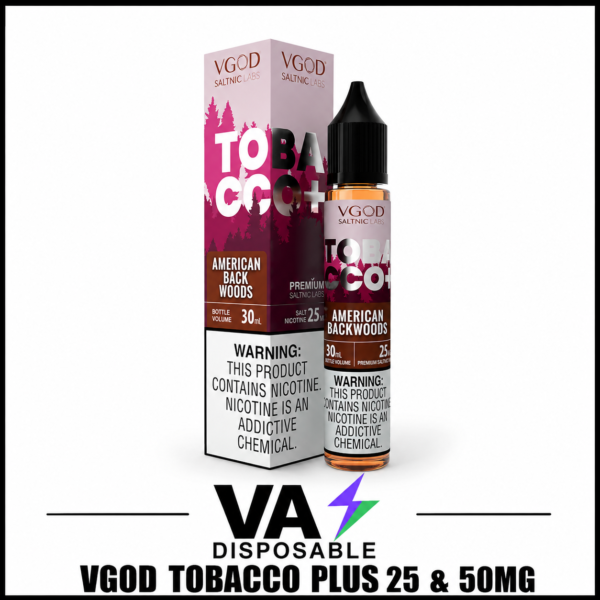
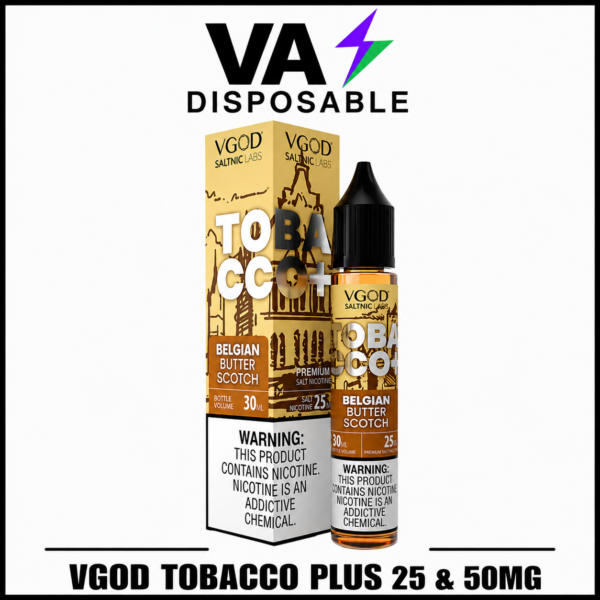
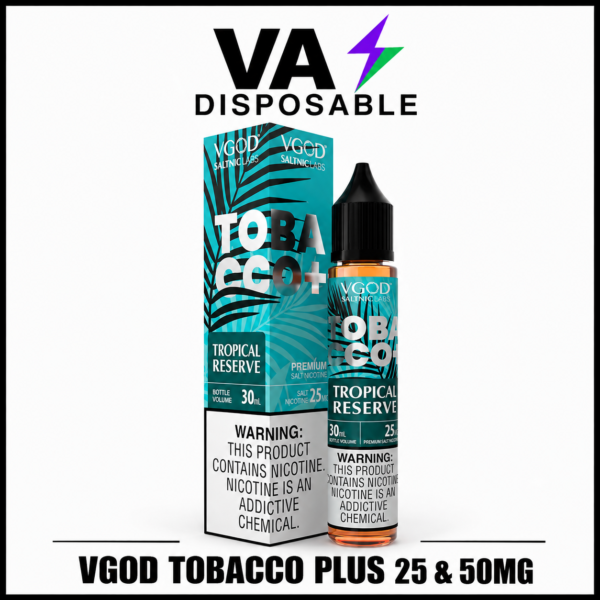
American Backwoods, Belgian Butterscotch, Desert Blend, Tropical Reserve
Reviews
There are no reviews yet.
Be the first to review “VGOD Tobacco Plus Salt Nicotine 25MG & 50MG”Cancel Reply





Reviews
There are no reviews yet.